Are you a supplier?

We invite you to register on our platform and characterize your technological solution, so you can participate in the open innovation processes that we carry on for the main mining companies in the country
Register here
We invite you to register on our platform and characterize your technological solution, so you can participate in the open innovation processes that we carry on for the main mining companies in the country
Register here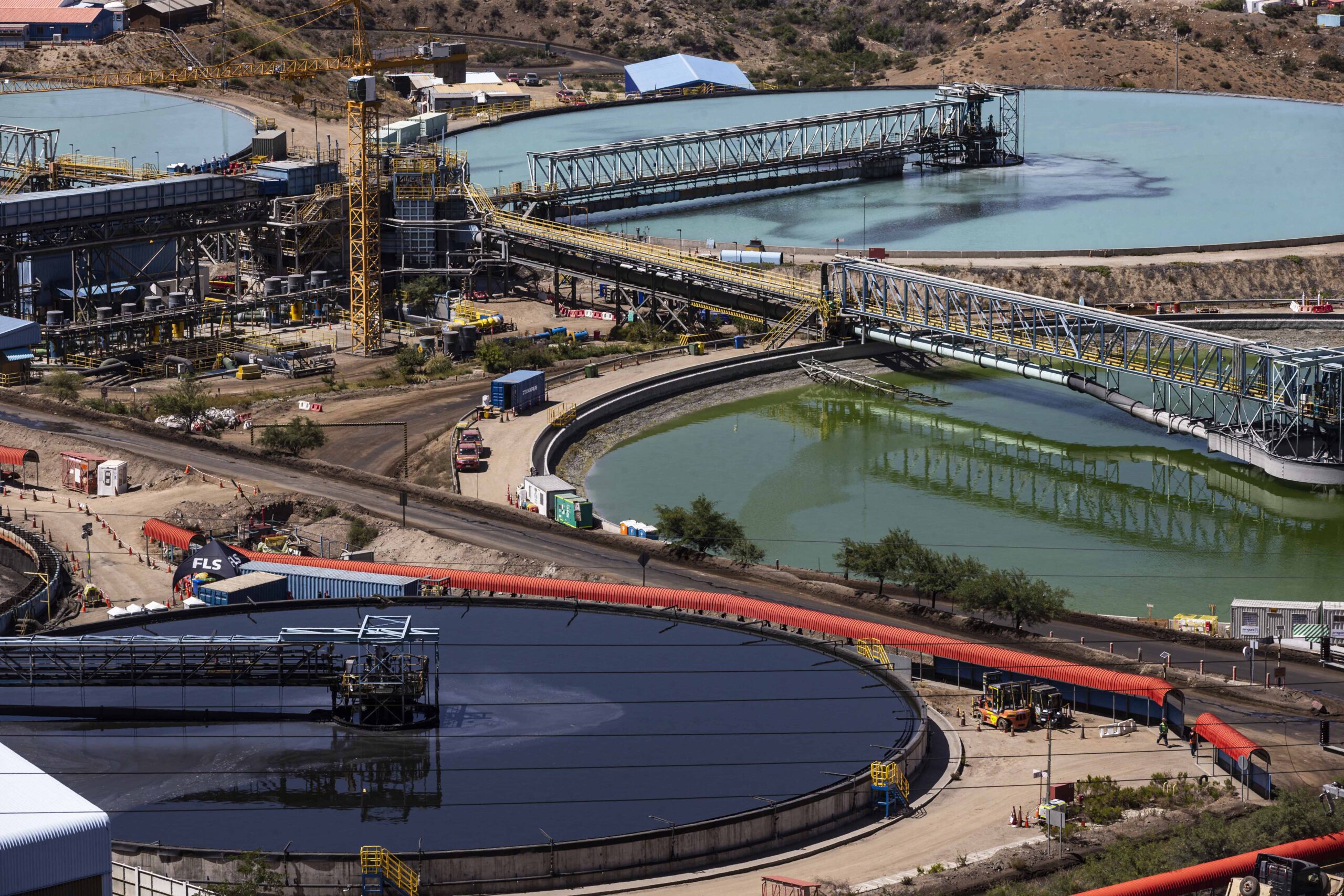
Faena: Los Pelambres Mine
Deadline 12/02/2026
Closing Time 4:00 pm
Minera Los Pelambres faces the challenge of improving the monitoring of the structural condition of the rake arms in the tailing’s thickeners at its concentrator plant. These rake arms operate continuously and are fully submerged in tailings with a high solids concentration (on the order of 50% to 60%), under variable drag conditions that generate complex mechanical stresses, which are difficult to detect in a timely manner using conventional monitoring systems.
The thickeners involved are large-diameter units (approximately 120 m) with rake arms between 30 and 40 m in length. These dimensions, along with the low frequency of thickener emptying (typically every 1 to 2 years), impose significant constraints for the installation, inspection, and maintenance of direct instrumentation on the rake arms.
In this context, it is necessary to evaluate solutions for indirect measurement of structural condition, such as acoustic technologies across different frequency bands, fiber optic Bragg networks, or other alternative technologies. These solutions should preferably be installable in accessible areas of the thickener and allow early detection of deformations, abnormal stresses, or failure precursor conditions through the analysis of noise, deformation, or other relevant physical variables, without limiting the challenge to a specific technology.
When the structural integrity of the thickener scrapers needs to be assessed. Currently, a detailed inspection requires the thickener to be completely emptied in order to identify structural conditions that could pose a threat to the safe and continuous operation of the equipment.
Unplanned shutdown of thickeners due to unexpected events related to structural failures
Currently, the condition of the rake arms is assessed by visual inspections during major maintenance, when the thickener is emptied and the rake arms are thoroughly cleaned. This approach is reactive, low-frequency, and dependent on long scheduled shutdowns.
The objective of this challenge is to identify a technological solution that enables indirect and continuous measurement of the condition of thickener rake arms, to anticipate structural failures and reduce unexpected events that could affect operation. The scope of the challenge considers the evaluation of technological solutions without limiting itself to a specific technology, provided they meet the defined technical and operational requirements.
Companies, startups, institutes, universities, research centers, and other legally established entities in accordance with the legislation of their country of origin may apply. Natural persons are excluded from this call.
The invitation is extended to promote collaboration and to complement technological and/or business capabilities among companies, ventures, or other entities. For teams and consortia, the responsible institution must be clearly identified in the application.
Consulting, advisory, and engineering study services are excluded.
The proposed solution must meet a series of technical and operational requirements to ensure its feasibility within the company’s current and future context:
Non-invasiveness: The solution must be non-invasive, requiring no physical modifications or direct interventions on the rake arms.
Robustness for severe operating conditions: The solution must be suitable for heavy-duty operating conditions, considering environments with high humidity, presence of tailings, and exposure to corrosive conditions.
Online monitoring and measurement continuity: The solution must allow online monitoring, with periodic or continuous readings of the relevant physical variables for assessing the structural condition of the rake arms.
Technology readiness level: Solutions across the full spectrum of technology readiness levels will be considered, from TRL 1, corresponding to basic principles observed and early-stage technology concepts, up to TRL 9, representing fully developed, validated, and proven technologies operating in real industrial environments.
Low maintenance requirement: The solution must require minimal maintenance, considering the operational complexity and physical access limitations to the rake arm.