Are you a supplier?

We invite you to register on our platform and characterize your technological solution, so you can participate in the open innovation processes that we carry on for the main mining companies in the country
Register here
We invite you to register on our platform and characterize your technological solution, so you can participate in the open innovation processes that we carry on for the main mining companies in the country
Register here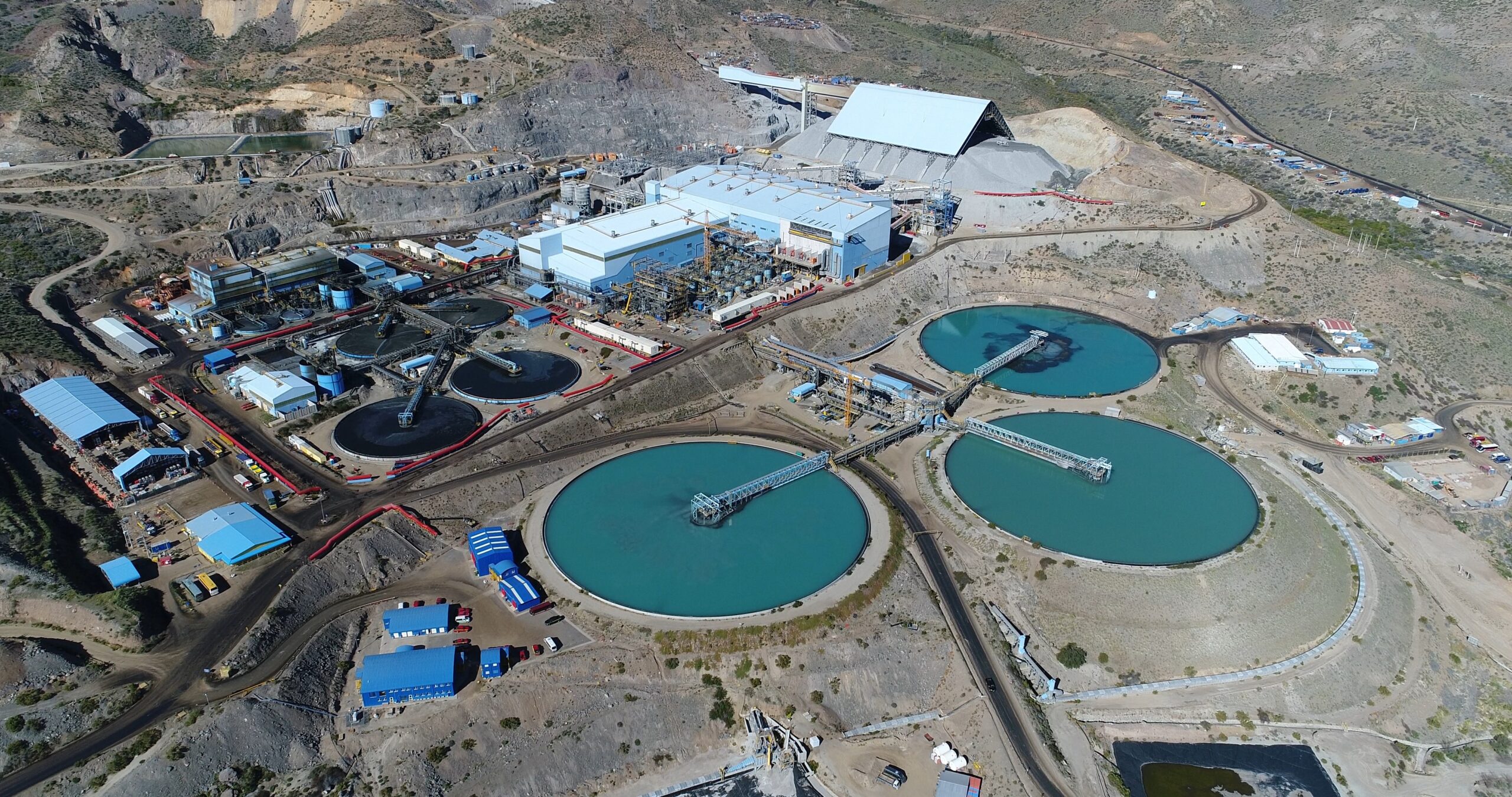
Faena: Los Pelambres Mine
Deadline 05/02/2026
Closing Time 4:00 pm
Minera Los Pelambres operates concentrate transportation system through a pipeline approximately 120 km in length, constructed of steel and internally lined with a HDPE liner, which connects the concentrator plant to the shipping port.
Along its route, and most critically in the port section and certain intermediate sectors, the concentrate pipeline incorporates energy dissipating rings, whose function is to control the hydraulic regime, reduce energy, and contribute to flow stability, particularly under transient operating conditions (flow and pressure variations). These dissipating rings operate under highly demanding hydraulic conditions, characterized by high fluid flow rates, dynamic variations in the flow regime, and exposure to severe environments, particularly in the port sector, where conditions of high corrosion, humidity, and salinity predominate.
Currently, the company does not have a specific tool that allows for online external monitoring of the operational behavior of the energy dissipation rings, nor for the early detection of deviations from their normal condition. This limits the ability to anticipate incipient failures.
In this context, it is necessary to evaluate technological solutions that enable continuous and non-invasive supervision, without interfering with pipeline operation, in order to improve the reliability and management of the concentrate transportation system.
During normal operation of the concentrate pipeline, the passage of concentrate through the dissipator rings causes normal, expected progressive wear on these components. However, when such wear is not uniform, it can cause the flow to be redirected toward the adjacent pipeline section, leading to accelerated wear of the spool adjacent to the dissipator ring and significantly increasing the likelihood of structural failure.
Undetected wear on the dissipator rings can lead to rupture of the downstream spool, as well as damage to the ring itself, causing rate instability and disturbances in transient flow conditions.
Currently, visual inspections of the energy dissipation rings are carried out during scheduled maintenance activities involving spool changes. In other cases, the replacement of energy dissipation rings and spools is based on hour-meter criteria and operational experience.
The objective of this challenge is to identify a technological solution that enables the measurement of noise or acoustic signals associated with the behavior of dissipator rings, aimed at the early detection of anomalous conditions or incipient failures, the prevention of unexpected breakage of the adjacent spool, and the assurance of operational stability of transient flow between dissipator rings.
Companies, startups, institutes, universities, research centers, and other legally established entities in accordance with the legislation of their country of origin may apply. Natural persons are excluded from this call.
The invitation is extended to promote collaboration and to complement technological and/or business capabilities among companies, ventures, or other entities. For teams and consortia, the responsible institution must be clearly identified in the application.
Consulting, advisory, and engineering study services are excluded.
The proposed solution must meet a series of technical and operational requirements to ensure its feasibility within the company’s current and future context:
Non-invasiveness: The solution must be non-invasive, requiring no modifications to flanges, energy dissipation rings, or spools, and without interfering with concentrate pipeline operation.
Operational robustness: It must be suitable for operation under demanding conditions, including transient flow, corrosive environments, high humidity and salinity, and mechanical vibrations.
Online monitoring: The solution must enable continuous, real-time monitoring, with permanent delivery of relevant operational information.
Technology readiness level: Solutions with a minimum technology readiness level of TRL 7 are accepted, meaning technologies demonstrated and validated in a relevant operational environment under conditions similar to industrial application.
Scalability: The solution must be scalable, allowing its application in other dissipator rings, spools, or flanges of the concentrate pipeline.