We invite you to register on our platform and characterize your technological solution, so you can participate in the open innovation processes that we carry on for the main mining companies in the country

Register here
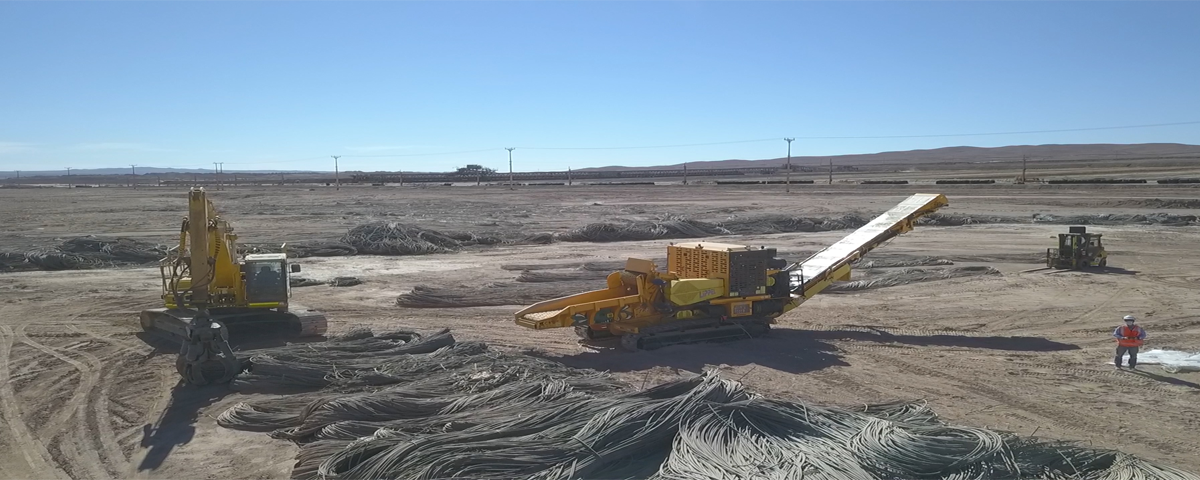
Circular Economy Opportunities in Storage Areas

Faena: Antofagasta Minerals

Deadline 29/05/2026

Closing Time 4:00 pm

ANTOFAGASTA MINERALS, as part of its commitment to promoting circular economy initiatives, faces a challenge in managing its nonhazardous solid waste at its Minera Los Pelambres (MLP) and Minera Centinela (CEN) operations. At these sites, there has been a progressive accumulation of waste in storage areas, exceeding the installed capacity for management, recovery, and disposal.

There are temporary storage areas for non-hazardous waste known as “Historic Areas,” which are areas that have been used for longterm storage of materials due to: high volumes of waste generated by mining operations and logistical constraints on their removal or recycling, either on-site or off-site. The main waste streams include: MLP and CEN:

  • Scrap metal and steel structures (MLP: 190,000 m³; CEN: 90 kton). CEN:
  • Industrial wood (packaging, pallets, temporary structures, among others) (CEN: 60 kton)
  • Rubber/HDPE (50 kton)
  • End-of-life tires (ELTs) (25 kton)
  • Conveyor belts (composed mainly of rubber) (3 kton)
  • Cardboard (2 kton)

Potential loss of value resulting from the failure to return materials to the production cycle through recovery or advanced recycling strategies.

Currently, the management of this waste takes a piecemeal approach, characterized by:

  • Prioritizing regulated waste streams, particularly those subject to regulations such as the EPR Law (Extended Producer Responsibility), which ensures regulatory compliance but does not necessarily maximize resource recovery.
  • Opportunistic circular economy initiatives focused on specific types of waste (e.g., metal recycling or one-off recovery of NFU), lacking a comprehensive, standardized, and scalable strategy across the entire Antofagasta Minerals group.

The objective of this call is to identify innovative technological and management solutions that will clear the “Historic Storage Areas” at Antofagasta Minerals operations by recovering, reusing, recycling, or transforming accumulated non-hazardous solid waste. Proposals must demonstrate technical and environmental viability, in line with the Circular Economy principles.

Companies, startups, institutes, universities, research centers, and other legally established entities in accordance with the laws of their country of origin are eligible to apply. Natural persons (individual applicants) are excluded from this call. We extend this invitation to foster collaboration and leverage technological and/or business capabilities among companies, entrepreneurs, and other entities. For teams or consortia, the lead institution must be clearly identified in the application.

Proposals falling into any of the following categories are excluded from this call for proposals:

  • Consulting services and engineering studies.
  • Proposals that, over their entire lifecycle (including development, implementation, operation, and final disposal), result in the creation of new environmental liabilities—defined as cumulative negative impacts or waste without a clear and viable strategy for recovery, treatment, or safe disposal.
  • Digital platforms, management systems, or monitoring tools that are limited to the administration, traceability, or reporting of circular economy indicators, and that do not incorporate an applied technological component aimed at the physical, chemical, or biological transformation of materials or waste.

The proposed solution for the treatment, recovery, and management of waste at the storage areas of Minera Los Pelambres and Minera Centinela must meet the following requirements:
  • Implementation: The solution must demonstrate feasibility for short-term implementation, considering actual operating conditions at the mining site. Priority will be given to technologies capable of immediately addressing the waste streams with the highest accumulated volume in the “Historic Storage Areas,” ensuring compatibility with existing processes.
  • Operational Impact: The solution must be compatible with existing infrastructure, logistics, and processes, minimizing disruptions to operational continuity and avoiding complex adaptation requirements
  • Proposal Logistics: Solutions are required that optimize waste management both on-site and off-site.
  • Scalability and Technological Maturity: Proposals must demonstrate a level of technological maturity (TRL ≥ 5) that allows for validation in industrial or semi-industrial (pilot) environments. Additionally, they must present a clear roadmap toward operational scaling, including considerations for operational continuity, processing capacities, associated logistics, and a sustainable business model over time.
  • Impact and Value Creation: Solutions must quantify and demonstrate benefits compared to the current situation, including environmental impact indicators (reduction in waste sent to landfills, reduction in carbon footprint, etc.).
  • Strategic Alignment with Antofagasta Minerals: The solution must align with Antofagasta Minerals’ strategic guidelines, particularly its sustainability objectives and its transition toward a circular economy model. Preference will be given to solutions that establish clear and measurable links with the Group’s strategies, including:
  • Climate Change Strategy
  • Circular Economy Strategy

Questions?