We invite you to register on our platform and characterize your technological solution, so you can participate in the open innovation processes that we carry on for the main mining companies in the country

Register here

Increase durability of wear plates in transfer chutes

Faena: Zaldívar Mine

Deadline 07/02/2025

Closing Time 4:00 pm

In the process of transporting ore through conveyor belts there are transfer points called transfer chutes, these are composed of different parts or elements that help the efficiency and functionality of these; to unload the ore to the next belt there are elements called load wear plates that facilitate the correct filling of the belt. Up to now, the current plates only reach a durability of:

  • 1.5 million tons processed in the crushing area.
  • 4.5 million tons processed in stacking and rehandling.

1. Crushing Area:

  • Processing: 3,000 tph of ore.
  • Ore characteristics: size 5 to 5.5 inches and falls from a height of approximately 12 meters.
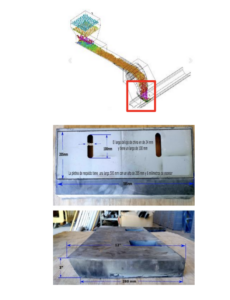
  • Actual plate size: see image.
  • Duration: 1 to 1.5 months.

2. Stacking and rehandling area:

  •  Processing: 3,000 tph of ore.
  • Ore characteristics: ore of 12 to 15 millimeters and 8% humidity in stockpile and 5% rehandling. Ore composition + hydrochloric acid + brine.
  • Duration: 3 months.

Currently, the low durability of the plates implies operational stoppages for their replacement with all the operational and safety implications that this involves. This procedure lasts approximately 6 hours for each chute and is performed once a month in Crushing, and every 1.5 months in Stacking and Re-stacking. Additionally, in Stacking, it must be considered that the addition of brine and hydrochloric acid generates hydrogen sulfide gas, so the control measures for this change of wear plates are of high risk for the personnel involved.

Although various material alternatives have been explored, the best performance recorded so far in the different areas has been the use of ceramic alloy with polymer backing and 65 Shore rubber plates.

Improve the durability of the load wear plates of the transfer chutes at the Dry Area Plant. Currently, these plates have low durability and do not meet the requirements for abrasion and wear resistance, especially in aggressive environments with acid, brine and HCl

TS Solutions will be evaluated according to the following factors:

  • Whether the solution corresponds to technologies, materiality, design or others that allow addressing the problematic.
  • Success cases/maturity level of the solution that allows to evaluate the risk level of its implementation. Suppliers should support the information provided with contracts or others.
  • Company’s capabilities to supply/scale the solution to operations. Suppliers should support with technical/economic background such as general experience, company size, structure, etc. Capabilities to scale the solution in success case.
  • Expected performance [time/ton processed] against the baseline specified in the challenge.
  • Critical factors/environmental or operational conditions present that are required for fulfillment of the value promise (humidity, hardness, inclination, etc.). In case the information presented in the submission does not allow the evaluation of the criteria described above, the minimum score will be given to this parameter. The supplier must indicate whether the proposed solution addresses scenario 1, 2 or both described in the challenge.

Solutions that meet the following three conditions are required:

  • The submitted solution must be TRL higher than 5.
  • The results of its operation/industrial test must be endorsed by the client company, information that will be corroborated by Expande.
  • Companies, startups, institutes, research centers or other legally constituted entities, in accordance with the current legislation of their country of origin.
  • Individuals are excluded from this call.
  • We extend the invitation to promote collaboration and complement technological and/or entrepreneurial capabilities between companies, startups or other entities.
  • For teams and consortiums, the responsible institution must be clearly identified in the submission.

Questions?