Are you a supplier?

We invite you to register on our platform and characterize your technological solution, so you can participate in the open innovation processes that we carry on for the main mining companies in the country
Register here
We invite you to register on our platform and characterize your technological solution, so you can participate in the open innovation processes that we carry on for the main mining companies in the country
Register here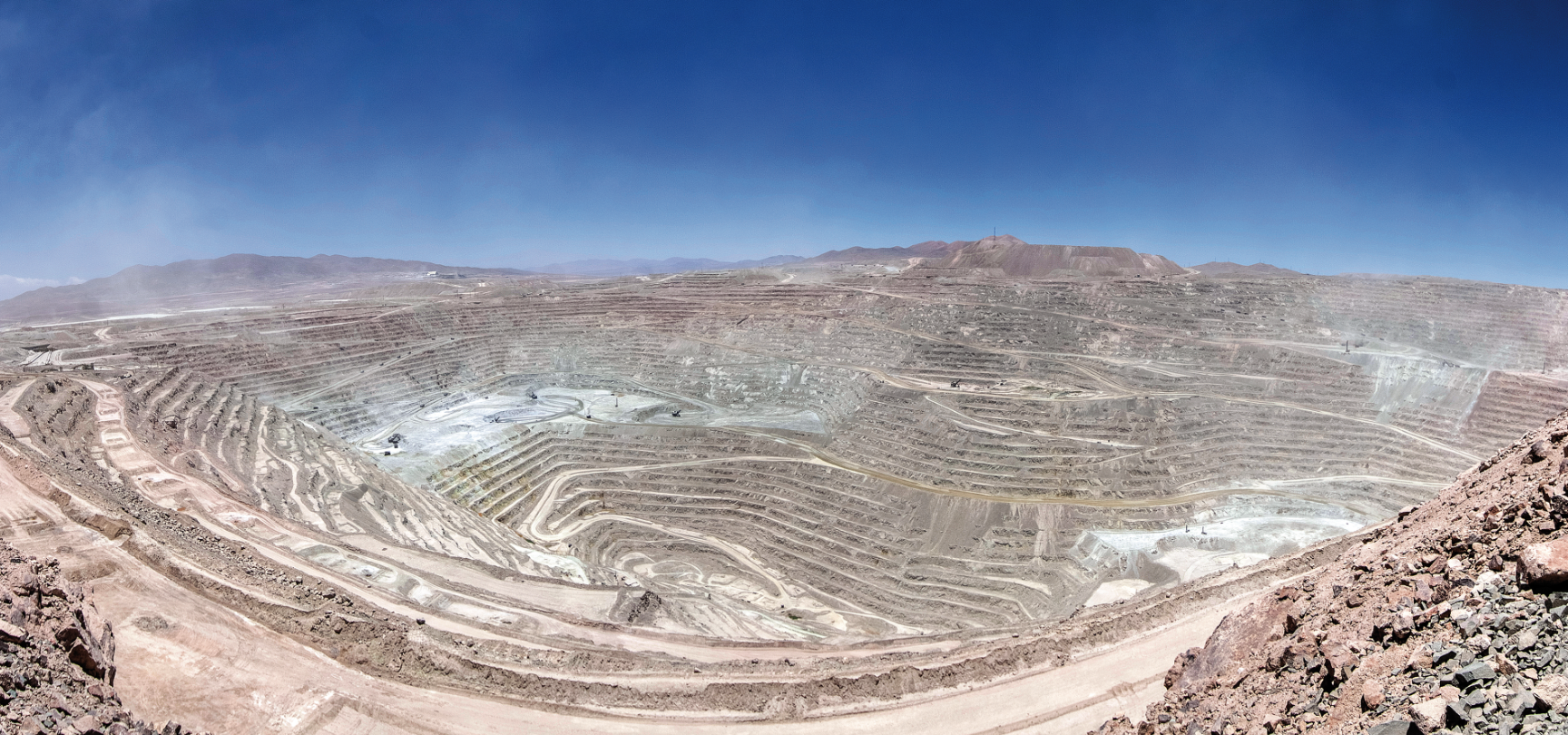
Faena: Escondida Mine
Deadline 09/05/2024
Closing Time 4:00 pm
Tailings from the Escondida mine (MEL) come from
three concentrator plants, Laguna Seca 1 and 2 and Los
Colorados, and are stored in the Laguna Seca tailings
dam, located 15 km southeast of the Escondida mine
and at an average geographical altitude of 2900 meters
above sea level. The flow of these tailings can reach up
to 400,000 tpd and have a solids content of
approximately 50-52%..
This dam consists of a series of distribution boxes that
receive the tailings and transport them through two
branches in the southern sector and one in the
northern sector, 20 km and 8 km respectively. The
outlet valves (spigots) are located every 500 meters in
groups of four, forming 10 outlet sectors that distribute
the tailings to the clear water pond sector. All
deposited tailings are homogeneously distributed over
the operating sectors of the pond and efforts are made
to reduce water losses contained in the tailings.
Currently, 25-30% of the water contained in the tailings
is recovered. Some of the water that is not recovered
remains in the tailings and cannot be released by
conventional methods.
The problem occurs when some of the water to be
recovered is retained in the tailings, i.e. trapped in the
small pores and micropores of the solid particles that
constitute the tailings.
Less water is released from the tailings, slowing
consolidation and reducing the amount of water
available for use in upstream processes.
Currently, only conventional methods are used to
recover water.
Laboratory tests have been carried out with chemical
reagents and electrode techniques have also been
tested.
Consulting or engineering studies are excluded.
Identification of technological solutions to allow the
release of water retained in the tailings to accelerate
its consolidation and facilitate its flow to the clear
water pond.
1. Must adapt to the variability of tailings conditions
(pH, density, chemical/mineralogical composition,
granulometry, etc.).
2. Should not interfere with the metallurgical process
of the concentrator plant.
3. Minimal or no infrastructural intervention during
the installation of the technological solution.
4. The applicant company must have a track record
that demonstrates its development capability and
scaling potential to achieve industrial pilot scale.
5. Must not generate waste that could affect the
environment.
6. Ideally, workers should not be involved in the
application of the solution.