Are you a supplier?

We invite you to register on our platform and characterize your technological solution, so you can participate in the open innovation processes that we carry on for the main mining companies in the country
Register here
We invite you to register on our platform and characterize your technological solution, so you can participate in the open innovation processes that we carry on for the main mining companies in the country
Register here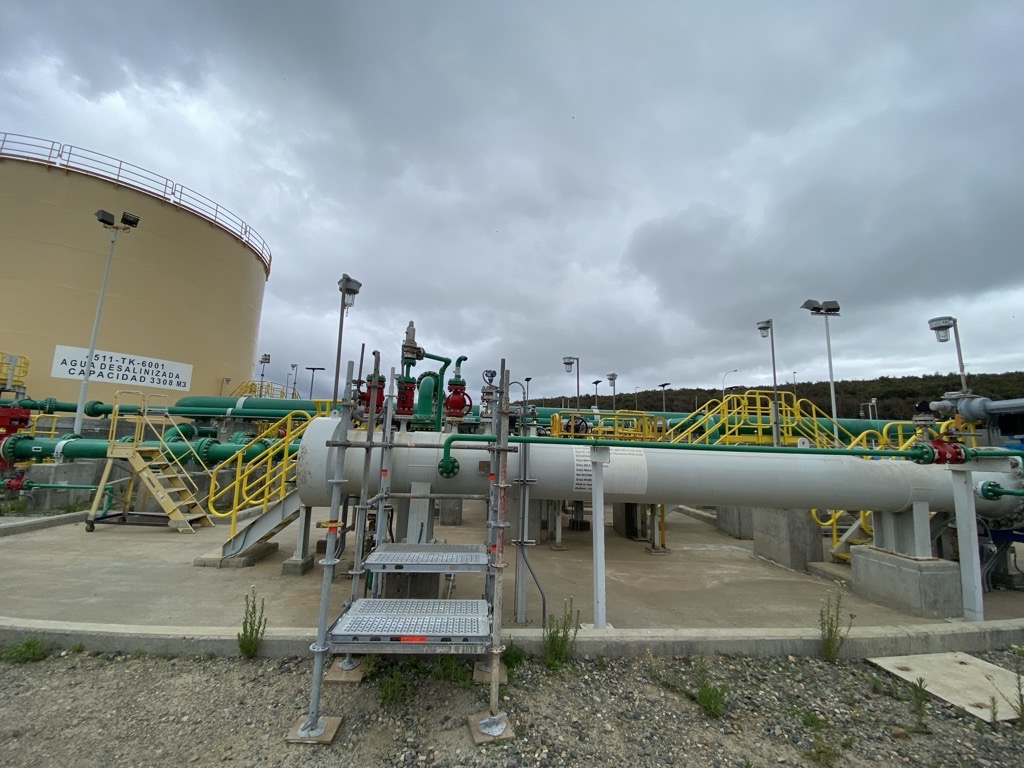
Faena: Los Pelambres Mine
Deadline 12/02/2026
Closing Time 4:00 pm
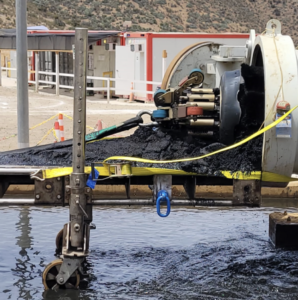
Minera Los Pelambres operates the Desalinated Water Conveyance System (SIAD), a continuous, non-segmentable pipeline approximately 61 km long and 24 inches in diameter, which transports water from the Punta Chungo desalination plant to the El Mauro tailings storage facility and processing areas.
Inside the pipeline, bacterial communities have developed which, although they have not affected system operation (which remains hydraulically stable), have caused localized microscopic damage associated with their metabolic activity. This damage is not detectable during normal system operation.
Cleaning activities carried out using conventional pigs (cups, brushes, and magnets) have not achieved effective removal of persistent bacteria inside the pipeline. These bacteria mainly correspond to sulfate-reducing and iron-reducing bacteria, which generate corrosion protected by crusts adhered to the internal surface. Additionally, slime-type bacteria have been identified, forming a mucous biofilm adhered to the internal surface of the pipeline. This biofilm protects the underlying corrosive bacteria and favors their persistence.
The applied cleaning treatment, which includes biocides, corrosion inhibitors, anti-scaling agents, and passivators, has proven effective in controlling the problem at a general level. However, it has been identified that although passivation protects the steel surface, bacteria remain alive and active beneath this layer. The competition between the slime layers and passivation to cover the internal surface of the pipeline reduces the effectiveness of the chemical treatment when it is not complemented by deep mechanical cleaning.
Continuously, as bacteria persist on the internal walls of the pipeline.
The pipeline experiences progressive degradation that is not visible during normal operation. Bacterial corrosion compromises structural integrity and increases the risk of failures and perforations.
Currently, pipeline cleaning is carried out using polyurethane cup pigs, complemented by a biochemical treatment applied before and after the pigging process.
The objective of this challenge is to identify a technological solution that enables progress toward a more effective and deeper mechanical cleaning mechanism for the SIAD, capable of reaching irregular areas, interstices, and sections not swept by conventional pigs; removing adhered biofilms and bacterial deposits; and acting as a true complement to biochemical treatment. This will allow halting the progression of bacterial damage and reducing future system risk.
Companies, startups, institutes, universities, research centers, and other legally established entities in accordance with the legislation of their country of origin may apply. Natural persons are excluded from this call.
The invitation is extended to promote collaboration and to complement technological and/or business capabilities among companies, ventures, or other entities. For teams and consortia, the responsible institution must be clearly identified in the application.
Consulting, advisory, and engineering study services are excluded.
Conventional cleaning pigs, including cup, disc, and brush pigs, are excluded from this opportunity.
The proposed solution must meet a series of technical and operational requirements to ensure its feasibility within the company’s current and future context:
Pipeline dimensions: The solution must be capable of performing effective cleaning along the 61 km pipeline, with a nominal diameter of 24 inches, considering that the diameter is not uniform and presents reductions in different sections associated with Victaulic joints.
Pipeline structure: The solution must address cleaning in critical areas such as interstices, joints, and other zones with irregular geometries, where bacterial accumulation and deposits are greater and conventional methods cannot reach.
Technology readiness level: Solutions with a minimum technology readiness level of TRL 7 are accepted, meaning technologies demonstrated and validated in a relevant operational environment under conditions similar to industrial application.
Launch and reception: The proposed solution must be compatible with the use of launching and receiving traps, ensuring proper operation and integration with existing systems.