Are you a supplier?

We invite you to register on our platform and characterize your technological solution, so you can participate in the open innovation processes that we carry on for the main mining companies in the country
Register here
We invite you to register on our platform and characterize your technological solution, so you can participate in the open innovation processes that we carry on for the main mining companies in the country
Register here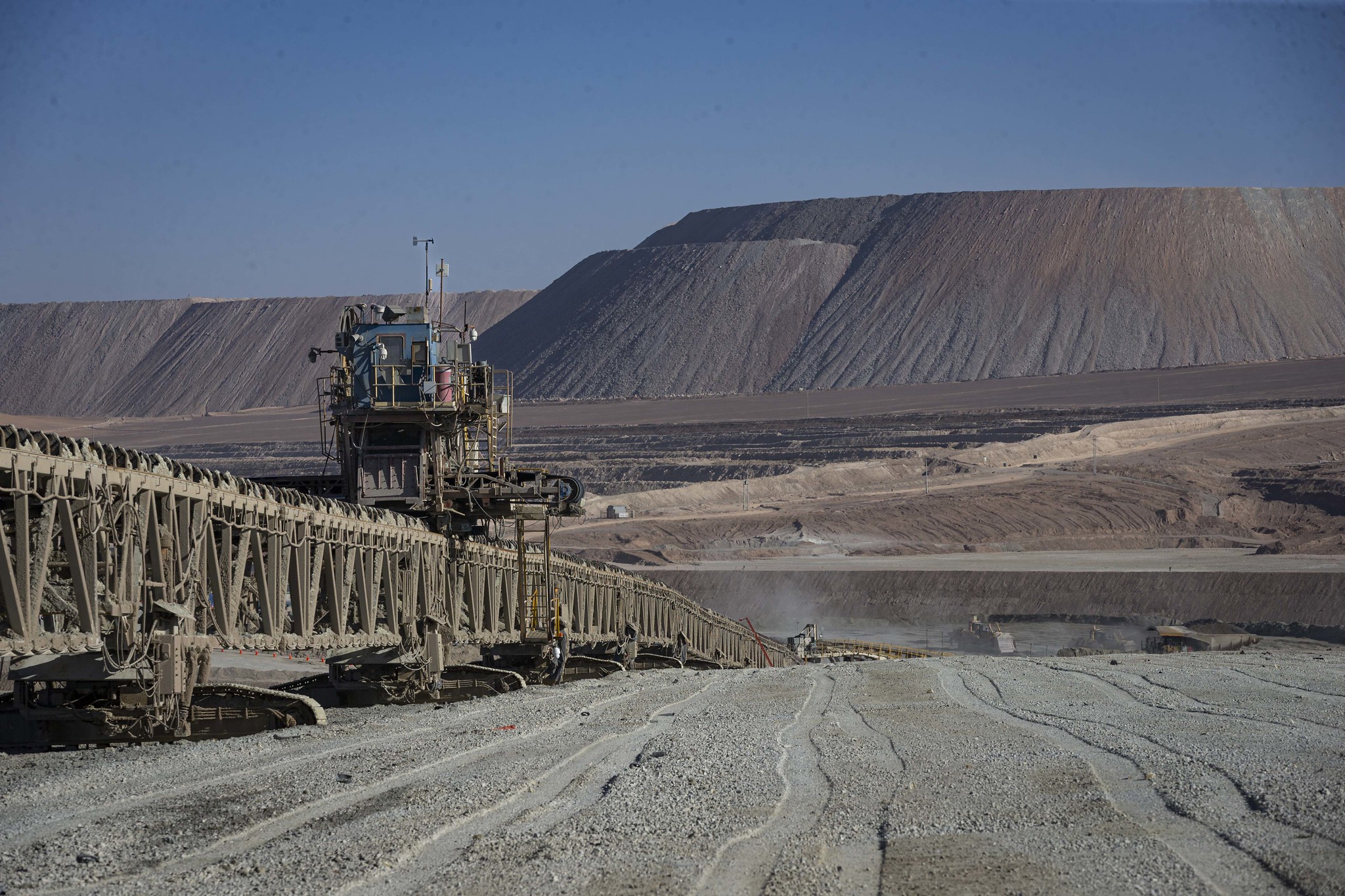
Zaldívar Mine, owned by Antofagasta Minerals, is located 175 kilometers southeast of the city of Antofagasta in the Antofagasta Region, 1,400 kilometers north of the country’s capital, Santiago de Chile. The deposit is located at an average altitude of 3,300 meters above sea level. The mining system used at the Zaldivar deposit is open pit. Currently, the operation is facing a significant change in mineralogy, characterized by a greater presence of primary and secondary sulfides, whose leaching has not yet been fully studied. As a result, recovery levels in the leaching piles are not as expected. Given this scenario, the company seeks to implement concrete actions to reverse this trend and strengthen its commitment to continuous process improvement. At Zaldívar, after the ore comminution process, brine and acid are added before being deposited in the dynamic heap leach stack with 106 piles and 8 hoses in each pile. The wetting process lasts approximately 7 days, followed by resting and then continuous irrigation, where it is irrigated with IPLS and then refined or mixed. The cycle lasts approximately 220 days. Pilot tests have been carried out in the HL heap with different types of instrumentation: measurement of flows, pressure, irrigation rate, temperature, and dissolved oxygen. Today, mature solutions are being sought that allow real-time data connected to the irrigation management system, enabling strategic decisions to be anticipated given its long cycle, allowing decisions in this area to be focused. Therefore, the aim is to add sensors or instrumentation for realtime monitoring, improving irrigation control and dosing, reducing losses, and stabilizing the leaching process.
The following are performed:
Instrumentation or sensorization in the heap, allowing measurement of flow, aeration, temperature, dissolved oxygen, among others, which can be integrated into the irrigation management system.
Solutions for the Heap Leach pile (635 m x 2000 m) with the presence of primary and secondary sulfides, with a 220-day cycle, where the first 100 days are irrigated with IPLS and then with refining or mixed. The solution must be capable of continuously measuring critical variables that limit recovery and also integrate with the irrigation management system to measure changes in recovery.
Companies, startups, institutes, universities, research centers, and other legally established entities in accordance with the laws of their country of origin are eligible to apply. Natural persons (individual applicants) are excluded from this call. We extend this invitation to foster collaboration and leverage technological and/or business capabilities among companies, entrepreneurs, and other entities. For teams or consortia, the lead institution must be clearly identified in the application.
Consulting, advisory services, and engineering studies.
The proposed solution must meet the following requirements: