We invite you to register on our platform and characterize your technological solution, so you can participate in the open innovation processes that we carry on for the main mining companies in the country

Register here
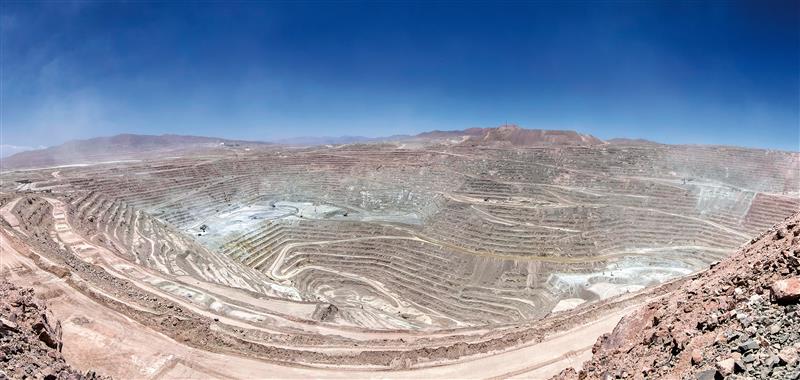
Automated Sampling and/or Integrated Analytics in Blastholes​

Faena: Escondida Mine

Deadline 06/03/2026

Closing Time 4:00 pm

At Minera Escondida Limitada (MEL), the sampling and analysis ofdrill cuttings generated during blasthole drilling constitute a keysource of information used to feed, validate, and refine thegeological models that support short-term mine planning andoperational decision-making.

Currently, although geological models, analytical controls, andQA/QC standards meet industry requirements, the sampling processpresents structural limitations in both capacity and turnaround time,primarily associated with its manual execution and the highoperational throughput.

MEL processes daily volumes ranging from 250 to 500 samplesunder normal operating conditions, with historical peaks of up to1,000 samples — values significantly higher than those typicallyhandled in other mining operations. This represents both adifferentiating factor and a critical constraint for any technologicalsolution. This volume — communicated only in aggregated form dueto its sensitivity — directly conditions the expected scalability,robustness, and performance of potential solutions. The drill rigs inoperation include EPIROC models (PV351 / PV271 / PV275) andBucyrus 49HR electric drills.

Current turnaround times for the full process — from field samplecollection to availability of chemical assay results — are on the orderof 24 to 48 hours, considering that:

  • Samples are transported to an external laboratory locatedapproximately 170 km away (La Negra).
  • Typical chemical assay turnaround time is approximately 25hours from laboratory receipt, based on a batch of 350 samples.
  • The standard analytical suite is primarily limited to four elements(total copper, soluble copper, arsenic, and iron) due to timeconstraints; gold, silver, and molybdenum analyses areperformed only in specific cases due to their greater complexityand longer processing times.

While these turnaround times are technically acceptable, they do notadequately match operational dynamics, particularly in scenariosinvolving multiple active mining fronts, accelerated night drillingcampaigns, or operational misalignments.

In this context, the Mine to Port program seeks to progressively replace manual sampling with automated solutions, while maintaining current quality standards and focusing efforts on increasing:

  • Personnel safety.
  • Sample representativeness.
  • Timely availability of information for decision-making.
  • Operational capacity to handle high daily sample volumes.

The problem arises during the blasthole drilling stage, where:

  • Manual sampling exposes personnel to material safety risks both at the mine site and during road transport.
  • Available human capacity does not allow simultaneous coverage of all active drilling fronts, particularly during peak periods (e.g., early morning hours).
  • Safety restrictions prevent sampling in certain holes, particularly those located less than 5 meters from the bench face, due to rockfall risk.
  • Coordination gaps with explosive charging activities or other equipment can delay or prevent timely sampling.
  1. Safety risks to personnel associated with manual drill cuttings sampling activities:
  1. Personnel struck by mobile equipment or vehicles..
  2. ii. Road traffic accidents.

iii. Collisions, impacts, and rollovers within the mine area, waste dumps, and stockpiles.

  1. iv. Rockfall-related injuries to personnel.
  2. Ground failure–related injuries to personnel.

  1. Operational delays resulting from:
  1. Capacity limitations of manual sampling when multiple drilling fronts are active.
  2. ii. Operational misalignments with other critical processes.
  1. Inability to sample blastholes located in higher-risk areas, particularly those close to bench faces, which reduces the spatial coverage of geological information.
  1. Reduced timeliness of geological data, affecting fine adjustments to models and short-term decision-making, even when analytical quality is adequate.

Sampling is currently performed manually, with one sample collected per blasthole representing a 15-meter column (per-meter sampling is not a requirement, but a desirable enhancement if enabled by the technology).

Samples are transported to an external laboratory, where the following activities are performed:

  • Sample preparation (drying, crushing, splitting/reduction, and pulverizing).
  • Chemical assays of target grades (primarily Cu: Total Copper, Soluble Copper, and Ferric Soluble Copper).

To date, only technologies with varying levels of technologicalmaturity (TRL) have been identified — but not yet tested — aimed atautomated sampling and improving drill cuttingsrepresentativeness. These solutions are primarily based oncontrolled material capture and separation, continuous transfer tocollection systems, adjustable sample splitting, and onlineanalytical methods to complement characterization during drilling.

There is also a historical precedent of a radiation-based technologycapable of delivering per-blasthole grade results in approximatelyone hour; however, it did not scale adequately to meet MEL’srequired processing volumes.

To identify, evaluate, and compare technologies — without restriction on Technology Readiness Level (TRL) — that enable automated sampling of blastholes.

Where available, to also generate analytical characterization of drill cuttings from blastholes, increasing sample representativeness, personnel safety, and operational efficiency for MEL.

Companies, startups, institutes, universities, research centers, and other legally established entities in accordance with the laws of their country of origin are eligible to apply. Natural persons (individual applicants) are excluded from this call.

We extend this invitation to foster collaboration and leverage technological and/or business capabilities among companies, entrepreneurs, and other entities. For teams or consortia, the lead institution must be clearly identified in the application.

Consulting services, advisory services, and engineering studies.

The proposed technology must meet the following requirements:

  • Operational capacity and scalability: Support high daily sample volumes (on the order of 500 samples per day, with higher exceptional peaks). It must be designed for a large-scale, continuous operation.


  • Alignment with MEL operational timelines: The technology must be compatible with MEL’s production rates and include maintenance and support plans that ensure mean time between failures (MTBF) appropriate to the operational intensity.


  • Minimal operational interference: The solution must be deployable without generating significant process constraints, ensuring operational continuity and minimizing unplanned downtime.


  • Maintainability, support, and calibration: The solution must demonstrate ease of maintenance, low intervention frequency, availability of technical support (local and/or remote), and defined calibration procedures to ensure operational accuracy and repeatability.


  • Integration with existing systems: The solution must be capable of interfacing with MEL’s database platforms to ensure data continuity and traceability.


  • Technology Readiness Level (TRL): There is no restriction on TRL; however, the current maturity level must be declared, together with achieved milestones and supporting evidence.


  • Risk management: Include identification of technical and operational risks, along with associated mitigation measures and controls.

If your solution only addresses sample collection:

  • Real-time automated sampling: The solution must enable automated sampling during drilling, or immediately after drilling, and deliver representative samples with digital traceability, meeting MEL’s defined quality indicators, which are linked to downstream analytical precision as measured through field duplicate performance.


  • In terms of precision, the relative error associated with sampling must be ≤ 30% in duplicate pairs, with an error rate below 10%; that is, the total number of duplicate pairs with relative error greater than 30% must not exceed 10% of all evaluated pairs.

If your solution also includes chemical and/or mineralogical analysis:

  • Representative chemical and/or mineralogical analysis: The solution must enable per-blasthole analysis and, desirably (though not mandatory), per-meter analysis along the drilled interval, with adequate representativeness and in compliance with MEL’s established QA/QC standards for blasthole sampling.


  • In terms of precision, the relative error associated with analytical results must be ≤ 10% for replicate pairs, with an error rate below 10%; that is, the total number of replicate pairs with relative error greater than 10% must not exceed 10% of all evaluated pairs.


  • In terms of accuracy, standards must fall within ±2SD and exhibit a bias no greater than 5%.

  • Contamination criteria:
  • Fine blank: the reported value must not exceed three times the Cu detection limit (0.01%), i.e., not greater than 0.03% Cu.
  • Coarse blank: the reported value must not exceed five times the Cu detection limit (0.01%), i.e., not greater than 0.05% Cu.

Questions?