Are you a supplier?

We invite you to register on our platform and characterize your technological solution, so you can participate in the open innovation processes that we carry on for the main mining companies in the country
Register here
We invite you to register on our platform and characterize your technological solution, so you can participate in the open innovation processes that we carry on for the main mining companies in the country
Register here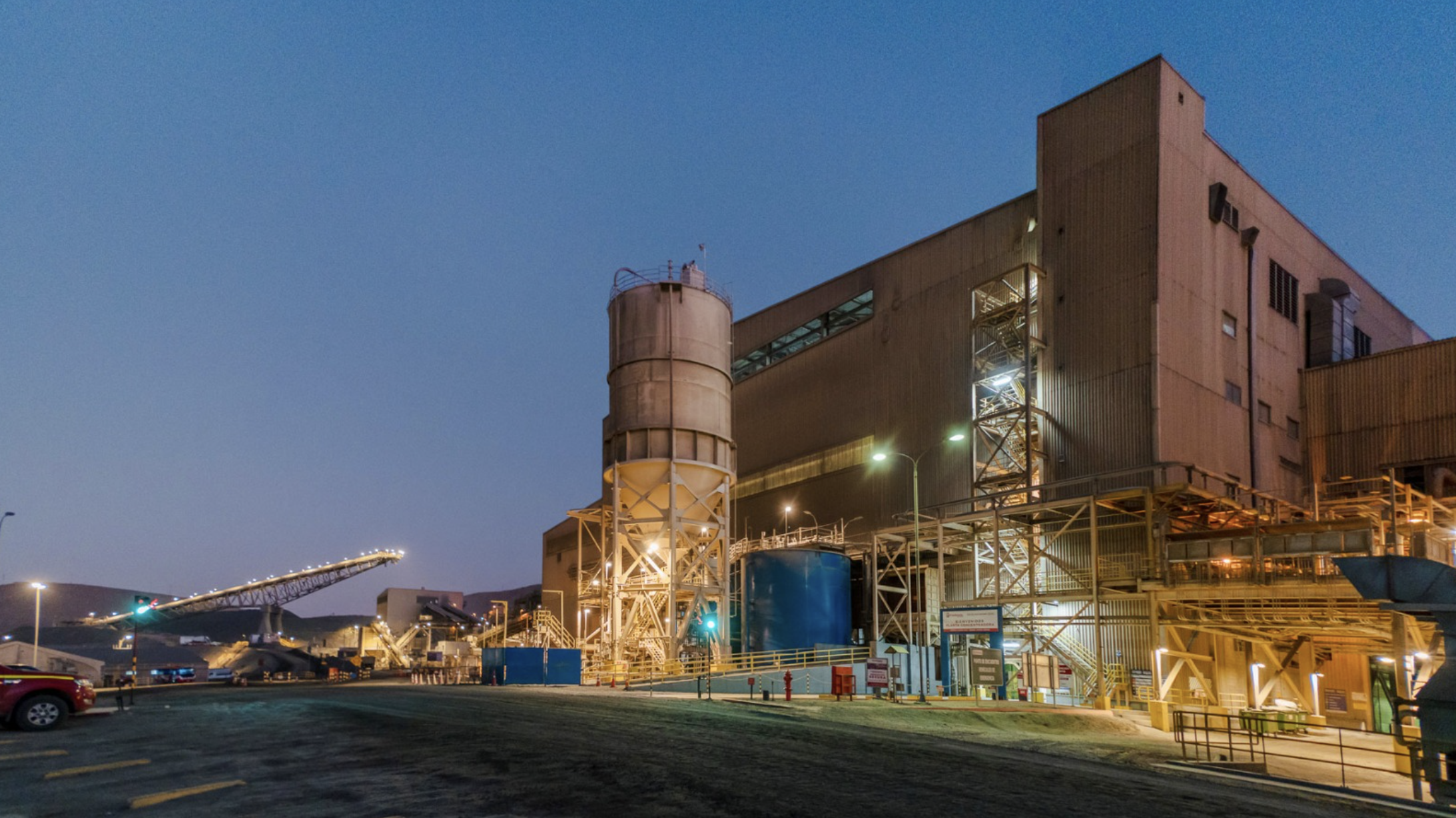
Faena: Minera Candelaria, Lundin Mining
Deadline 23/09/2025
Closing Time 4:00 pm
Minera Candelaria, operated by Lundin Mining, is a mining complex located in the Atacama Region of Chile. The operation includes an openpit mine (Candelaria Rajo) and underground mines (Candelaria Norte, Santos and Alcaparrosa), which supply ore to two concentrator plants: Candelaria and Pedro Aguirre Cerda (PAC). The production process focuses on obtaining copper concentrate, with gold and silver as byproducts. Near this complex lies La Española, a deposit currently in the exploration stage. This deposit has been the subject of various geological evaluations and exploration programs, which have revealed a high presence of associated minerals, including cobalt (Co), primarily linked to pyrite. This represents a significant opportunity to recover cobalt as a byproduct, diversifying mineral exploitation in the district and enhancing the business model through the valorization of critical metals. Considering that La Española could begin operations towards the end of the five-year period, with options to accelerate its startup, the challenge has been defined as evaluating the technical and economic feasibility of cobalt recovery. This will require a specific and adaptable strategy for its future integration with the existing processing infrastructure. Currently, the Candelaria concentrator plant does not include processes aimed at cobalt recovery, resulting in most of this metal being lost in the flotation tailings, particularly during stages such as scavenger flotation. In the future, the plant is expected to process a feed composed of ores from both Candelaria and La Española, introducing additional challenges related to ore variability, metallurgical behavior, and the definition of optimal flows for cobalt recovery. In this context, Minera Candelaria seeks to identify viable technological solutions to recover cobalt from various stages in the concentration process, and subsequently evaluate which alternative is most suitable from both technical and economic perspectives. This development will follow a progressive approach, beginning with laboratory tests using representative samples from both deposits, advancing towards proof of concept and pilot scale testing, with the potential for implementing modular and scalable solutions.
The objective of this call is to identify a technological solution that enables the efficient and economically viable recovery of cobalt as a by-product from the La Española mine. Ideally, this recovery would occur from tailings or other stages of the concentration process, complementing the copper-focused core operation. This solution must be applicable within the future context of mixed ore processing from both Candelaria and La Española deposits.
Companies, startups, institutes, universities, research centers or other legally constituted entities, in accordance with the current legislation of their country of origin. Natural persons are excluded in this call. We extend the invitacion to promote collaboration and complement technological and/or entrepreneurial capabilities between companies, startups or other entities. For teams and consortia, the responsible institution must be clearly identified in the application.
Consulting, advisory and engineering study solution.
The proposed solution for cobalt recovery must meet a series of technical and operational requirements that ensure its viability within the current and future context of the Candelaria District. These requirements are: